Introduction to Disruptive Negotations: Navigate Trust at Distance.
An opening statement of intent. What this record is for, where the research comes from, and the seven interrelated pillars of the Business Negotiation Framework that emerged from sixteen interviews with European executives.
Welcome to timherglotz.com. This site is designed to offer valuable information on my favorite topic “negotiations”. It serves as an online resource with a starting point from my Doctor of Business Administration (DBA), focused on negotiations in the new virtual world.
Do you remember old school negotiations? It was an honest handshake world, boardroom tables, and the art of reading the room. It was a place where you could build trust by eating together and close billion-dollar deals by looking each other in the eye. This was the landscape of large, complex negotiations that was undisputed for decades.
Then, the world changed almost overnight. Remote work was not only brought about by the COVID-19 pandemic; the whole negotiation process was also moved to the virtual world. This change had even the most experienced dealmakers posing a crucial question:
Can the delicate dance of trust, credibility, and strategic advantage be performed through a screen?
My doctoral dissertation, “Negotiating Trust at a Distance: Virtual Complex B2B Negotiations in post-COVID Europe,”1 offers a deep insight into this new reality. It is not only a study, but a step-by-step map of the new “normal” of dealmaking in our more digital world.
This thesis is much more than a mere “in-person vs. virtual” argument. It goes directly to the core of modern negotiations, founded on thorough study and in-depth interviews with 16 leading executives and negotiation professionals in Europe. It goes even further, offering a unique perspective by examining how three AI models perceive these complex human interactions.
The key themes discussed are further broken down as follows:
The Complete Transformation of Negotiation: The research demonstrates the total restructuring of the negotiation process. The days of open-ended and multi-day workshops are long gone. The new era is characterized by the “time-boxed, agenda-driven, and structured sessions” that the thesis calls for. Think 90-minute sprints, pre-determined targets, pre-determined points to be discussed, and a brutal efficiency motive.
The New Currency of Trust: Trust has developed without a physical existence. The thesis presents the notion of “cognitive trust”, a type of credibility that cannot be ascribed to gut feeling or personal chemistry (“affective trust”), but rather to demonstrable competence, reliability, and consistency. The virtual world is believed in with careful, precise communication, follow-ups, and a professional online presence.
The Rise of the Data-Driven Negotiator: Data has supplanted improvisation and charisma, which were the main traits of a great negotiator. The contemporary negotiation is a play supported by extensive research, a live data dashboard, and AI-powered scenario analysis. It is no longer about knowing your numbers; it is about having the right data at your fingertips, at the right time.
AI: The Negotiator’s New Co-Pilot: The thesis explores the new role of Artificial Intelligence (AI) as a valuable facilitator in negotiations. Since it can summarize long transcripts and write proposals, as well as more complicated simulations with AI-generated personas (like a skeptical CFO), AI is improving the skills of human negotiators, who can now concentrate on strategy and relationship-building.
The Enduring (and Evolving) Human Factor: The human experience of negotiation has been heightened despite technological advances. The thesis sheds light on the lived experiences of so-called “Zoom fatigue” and the psychological pressure of managing multiple high-stakes deals at once. It also shows the new, less visible “power play” of the virtual world, such as the strategic use of the “camera-off” button to gain dominance or control the flow of information.
Navigating Cultural and Generational Divides: The virtual world can help reduce and eliminate cultural and generational differences. The study examines how various communication styles and expectations are realized at the international level and how multigenerational teams are learning to integrate their individual strengths.
Business Negotiation Framework
The Business Negotiation Framework (see Figure 1 below) is the heart of the thesis and a practical, powerful model of success in this new landscape.
Business Negotiation Framework
The Business Negotiation Framework (see Figure 1 below) is the heart of the thesis and a practical, powerful model of success in this new landscape.
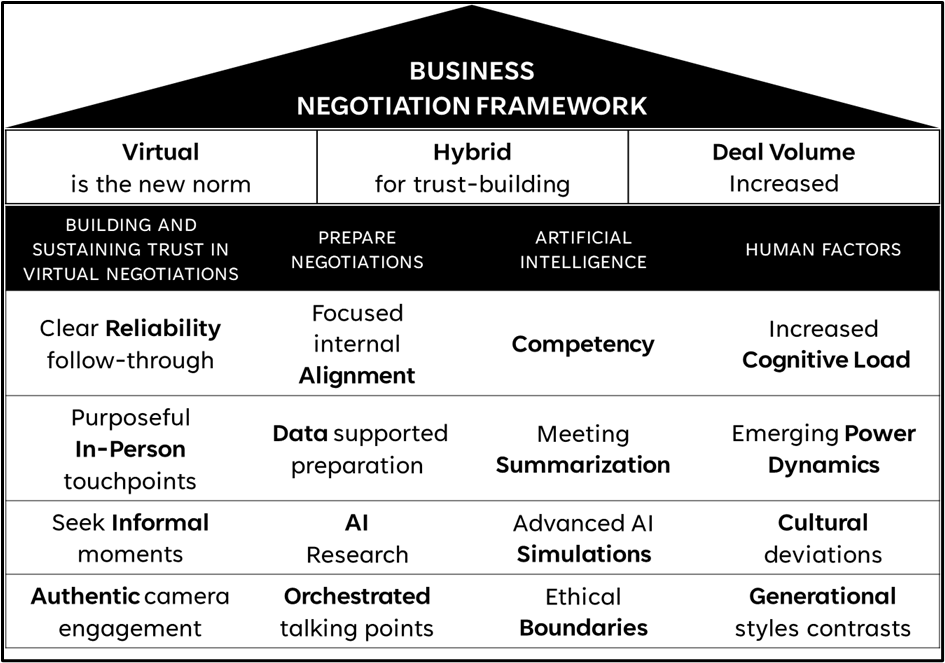
Figure 1: Business Negotiation Framework
This framework is not a loose code of rules but a holistic framework built on seven interrelated pillars, each with various themes. I will elaborate on each of the themes in the subsequent articles:
-
Virtual Communication as the New Norm: How to learn to communicate effectively in a virtual world clearly, concisely, and engagingly.
-
Hybrid Interaction for Trust-Building: A strategic combination of virtual effectiveness and high-impact, face-to-face meetings to establish and cement trust.
-
Managing Increased Deal Volumes: Developing the processes and discipline to handle a more parallelized and faster deal flow and pipeline without affecting quality.
-
Mastering Trust-Building in Virtual Negotiations: An in-depth explanation of the strategies of building “cognitive trust” by consistency and professional digitality.
-
Embracing Strategic and Data-Driven Preparation: Moving towards a more proactive, AI-enabled, data-driven approach.
-
Leveraging Artificial Intelligence as an Enabler: How to use AI in the negotiation process ethically and successfully to gain a competitive advantage.
-
Understanding the Human Factors at Play: How to develop the emotional intelligence to manage the psychological pressure and new social dynamics of virtual negotiations.
A Glimpse into the Future of Negotiation
The thesis does not merely look at the present, but it gives a fascinating glimpse of the future, the world in which AI does not replace human negotiators, but enhances them. Consider a future in which AI-based “co-pilots” suggest in real time during negotiations, where a complex contract is drafted in a few seconds, and where the topic of AI in negotiations becomes a highly specialized field. This study provides background on navigating this fascinating and complex future.
This thesis is not merely an academic treatise for a business world that has permanently become hybrid, but a field guide that the contemporary negotiator cannot do without. It offers an evidence-based, experience-based guide for anyone who wants to succeed in big, complex B2B negotiations. As a CEO, Sales Leader, Deal Maker, or a procurement professional, the knowledge in this study will help you build stronger relationships, make more impactful deals, and lead with confidence in our digital-first world.
Happy reading, Tim H.
Sources
- T. Herglotz, Negotiating Trust at a Distance: Virtual Complex B2B Negotiations in post-COVID Europe (DBA thesis). Sixteen semi-structured interviews with European executives and negotiation practitioners; three AI models examined.↩
Notes
- The seven pillars introduced here are treated individually across later entries. See № 04 on trust-building, № 03 and № 06 on artificial intelligence, № 05 on the human factors, and № 07 on hybrid interaction.
Cite this entry
Herglotz, T. (2026) 'Introduction to Disruptive Negotations: Navigate Trust at Distance.', Tim Herglotz, № 01, 10 February 2026. Available at: https://timherglotz.com/introduction/
BibTeX
@misc{herglotz2026dn01,
  author       = {Herglotz, Tim},
  title        = {{Introduction to Disruptive Negotations: Navigate Trust at Distance.}},
  year         = {2026},
  month        = {2},
  number       = {1},
  howpublished = {Tim Herglotz, entry № 01},
  url          = {https://timherglotz.com/introduction/}
}New entries as they are published. No more than monthly.
Join the list